



About 30 kilometres from Jaipur sits a small village where the rhythm of wooden blocks meeting cotton has barely paused in four centuries. The artisans of Bagru, the Chhipa community, whose very name comes from the act of stamping cloth, still mix their dyes from iron, jaggery, and plant extracts, still carve their blocks by hand, and still let the Rajasthan sun do the finishing work.
The Bagru Collection at Cotton Cottage carries that craft into clothes you'll actually reach for on a Tuesday morning or a Sunday brunch. This guide walks you through what makes Bagru print special, how it's made, and most importantly, how to style the collection's kurtis, dresses, kurtas, and shirts for every occasion on your calendar.
What Is Bagru Print?
Bagru print is a traditional form of hand block printing from Bagru village near Jaipur, Rajasthan, where artisans stamp fabric with hand-carved wooden blocks and colour it using natural dyes. The craft has been practised by the Chhipa community for more than 400 years and is known for its earthy palette, deep reds, iron blacks, indigo blues, and warm ochres and motifs drawn from nature: florals, buttis, vines, and fine geometric jaals.
What sets Bagru apart from machine printing is the human hand behind every repeat. Each motif is pressed onto the cloth individually, so no two pieces are ever perfectly identical. The slight shifts in alignment and depth of colour aren't flaws, they're the signature of a real artisan, and the reason a Bagru kurti feels alive in a way a digitally printed one never quite does. The craft's authenticity is now formally protected too, with Bagru print receiving a Geographical Indication (GI) tag that ties the name to the region and its makers.
How a Bagru Piece Is Made
Every garment in the Bagru Collection begins long before it's stitched. Here's the journey the fabric takes:
Preparing the cloth. Raw cotton is washed thoroughly to strip away starch and impurities, then treated with harda (myrobalan). This fruit-based solution gives the fabric a soft cream tint and acts as a natural mordant, the key that lets natural dyes bond deeply with cotton fibres.
Carving the blocks. Master block-makers carve motifs into seasoned sheesham or teak wood. A single design often needs a set of blocks, one for the outline (rekh), one for the background fill (gadh), and another for fine detailing (datta). A well-made block can serve an artisan family for generations.
Printing by hand. The printer dips the block into dye and presses it onto the stretched fabric with a firm, practised thump, then repeats, motif after motif, metre after metre. Traditional Bagru colours come entirely from natural sources: syahi, the characteristic black, is fermented from iron and jaggery; begar, the red, comes from alum and madder root.
Sun and water. The printed fabric is dried in open sunlight, washed, and dried again, in a slow finishing cycle that fixes the colours and gives Bagru prints their gently weathered, lived-in charm. Depending on the design, a single length of fabric can take several days from start to finish.
When you slip on a Bagru kurta, you're wearing days of skilled handwork, not minutes of machine time.
Why Cotton Is the Perfect Canvas for Bagru
Bagru printing and cotton have been partners from the very beginning, and the collection leans into that pairing with four distinct cotton weaves:
-
Cotton flax is a crisp, structured blend with the breathability of cotton and the texture of linen. It holds its shape beautifully, which is why the collection's shirts and kurtis favour it.
-
Cotton slub woven with subtle irregular threads that give the surface a soft, organic texture. The slub weave adds depth to block prints, making colours look richer.
-
Cotton malmal, featherlight and airy, the classic Indian summer fabric. Ideal for tops you'll wear through humid afternoons.
-
Cotton dobby is a weave with a fine self-pattern in the fabric itself, adding quiet detail beneath the print.
Every one of the 22 pieces in the collection at Cotton Cottage is 100% cotton and hand block printed, no shortcuts, no screen-printed lookalikes. Sizes run from S to XXL, with both long-sleeved and sleeveless options, and fits ranging from classic to relaxed and oversized.
Bagru for Workdays
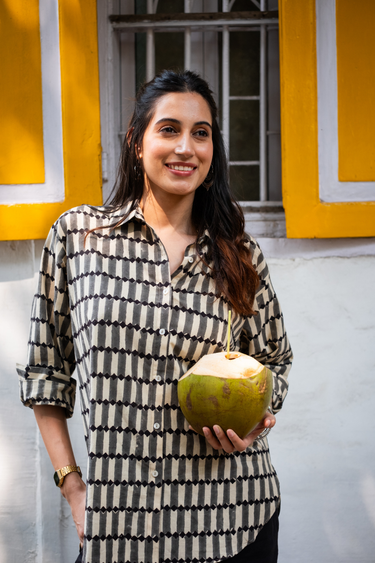
Block prints at the office work best when the silhouette stays sharp, and the palette stays grounded and that's exactly what the collection's shirts and kurtis deliver. The Grey Black Bagru Lite Cotton Flax Women's Shirt is the quiet achiever here. The grey-black palette reads polished in any meeting room, while the light cotton flax keeps you comfortable through a full day at your desk. Pair it with tailored trousers or wide-leg pants, and you're done.
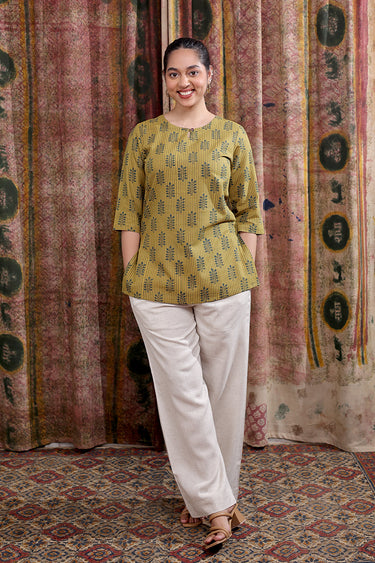
For kurti-and-pants dressers, the Olive Green Bagru Cotton Flax Women Kurti and the Rust Bagru Cotton Flax Women Kurti are dependable Monday-to-Friday picks. Both sit in that sweet spot of muted, earthy tones that feel put-together without trying too hard. Team them with ankle pants in a matching or contrasting solid.
Styling tip: With busy block prints, keep accessories minimal, small studs, a plain watch, and neutral flats. Let the print do the talking.
|
|
|
Bagru for Weekend Brunches and Casual Days
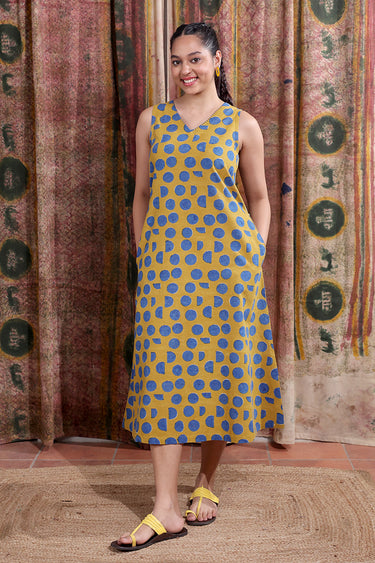
Weekends call for prints with a little more play, and the collection's midi dresses were made for exactly this. The Blue Mustard Bagru Cotton Slub Women Midi Dress pairs indigo-family blues with warm mustard, a combination that photographs beautifully over a long brunch table. The Red Grey Bagru Cotton Flax Women Midi Dress brings Bagru's classic red into an easy, throw-on-and-go silhouette, while the Blue Brown Bagru Cotton Slub Women Midi Dress keeps things soft and earthy for daytime plans.
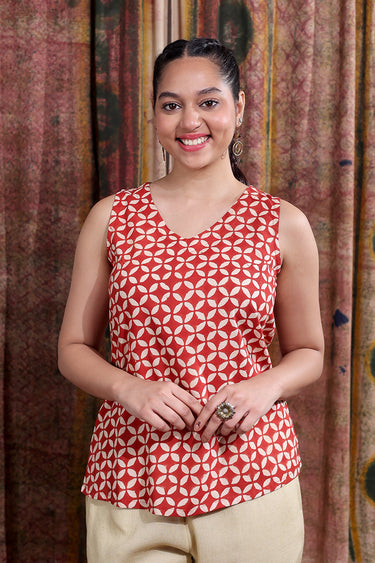
Prefer separates? The Red Bagru Cotton Malmal Women Short Top, the most affordable piece in the collection, is featherlight malmal in Bagru's signature red. Wear it with jeans, a denim skirt, or white wide-leg pants, and you've built three outfits from one top.
|
|
|
Bagru for Festive and Family Occasions
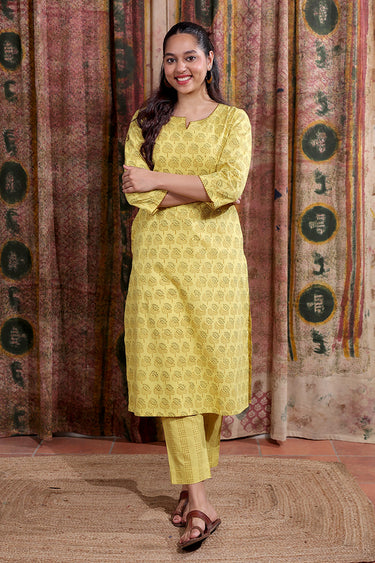
For pujas, family lunches, and festive gatherings, long kurtas carry the day, graceful, comfortable, and rooted in tradition. The Yellow Bagru Cotton Dobby Women Long Kurta is a natural festive pick; yellow has always been an auspicious colour in Indian celebrations, and the dobby weave adds a subtle richness up close. Pair it with a flared or ankle pant and a light dupatta.
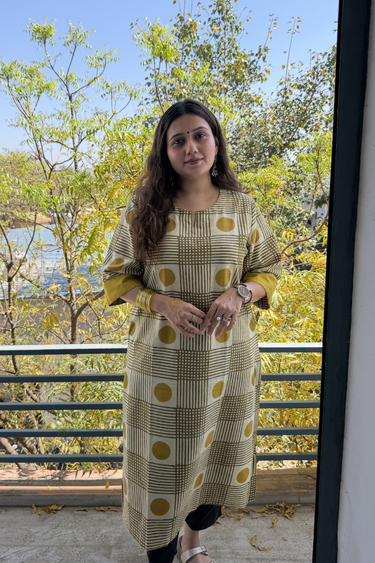
The Military Green Bagru Cotton Slub Women Long Kurta takes a more contemporary route, with an unexpected shade that stands out in a room full of predictable festive brights, while the hand block print keeps it firmly traditional. Add oxidised silver jewellery and juttis to complete the look. Because these are breathable cottons rather than heavy occasion fabrics, you'll stay comfortable from the morning ceremony through the evening meal, no small thing during an Indian festival day.
|
|
|
Bagru for Travel and Summer Days
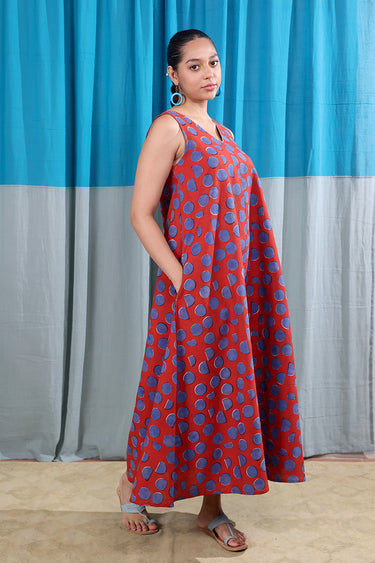
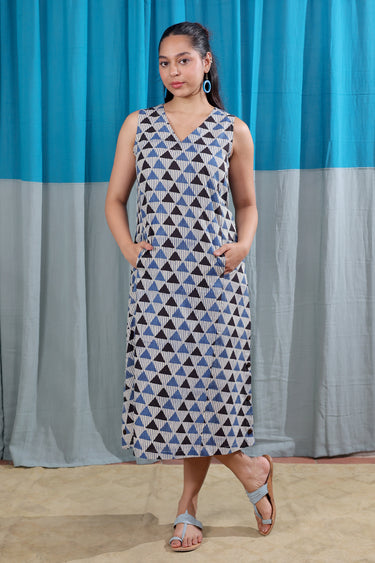
If you're packing for a holiday, Bagru cotton is close to the perfect travel companion: light, breathable, and forgiving of a day folded in a suitcase. The Rust Blue Bagru Lite Cotton Flax Women Maxi Dress is a one-piece answer to sightseeing days full coverage against the sun, effortless drape for photos, and a rust-and-blue print that pairs with sandals or sneakers alike. The Blue Black Bagru Cotton Slub Women Midi Dress works equally hard, moving from a morning at the market to dinner with just a change of earrings.
For lighter packing, the Red Brown Bagru Cotton Flax Women Kurti layers over jeans, leggings, or shorts, giving you multiple outfits from a single piece.
|
|
|
How to Care for Your Bagru Prints
Natural dyes reward gentle handling. A few simple habits will keep your Bagru pieces looking beautiful for years:
-
Washing the first two or three times in cold water, natural dyes can release a little excess colour early on. This is normal for hand block prints.
-
Use a mild detergent and skip bleach entirely; harsh chemicals break down plant-based dyes.
-
Dry in shade, inside out. Direct sunlight over time can soften the colours faster than you'd like.
-
Iron on the reverse at medium heat while the fabric is slightly damp for the crispest finish.
Cared for this way, natural-dye prints don't fade so much as mellow, developing the soft, vintage character that makes old Bagru textiles so loved. Wash & Care guide from Cotton Cottage
Conclusion
Choosing a Bagru piece is a quiet vote for slow fashion: natural dyes over chemical ones, artisan hands over factory lines, and a 400-year-old village tradition over disposable trends. The fact that it also happens to be some of the most comfortable, versatile clothing you can own is the Bagru bonus. Explore the full Bagru Collection at Cotton Cottage 22 handcrafted cotton styles. Free shipping across India on orders over ₹1,500.


