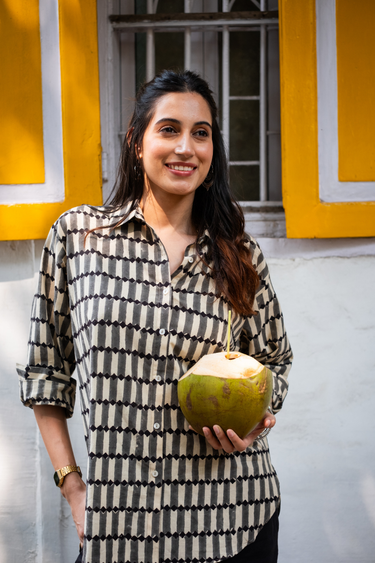



What Is Ajrakh Print?
Ajrakh print is a traditional form of hand block printing that uses natural dyes and hand-carved wooden blocks to create intricate geometric, floral, and nature-inspired patterns on fabric. It originated in the Kutch region of Gujarat and the Barmer district of Rajasthan, and is one of the oldest surviving textile traditions in the world. The name "Ajrakh" is derived from the Arabic word Azrak, meaning blue, a nod to the deep indigo that was (and still is) the most iconic colour in Ajrakh's palette.
But Ajrakh is far more than a colour or a pattern. It is a form of storytelling, one that has survived civilisations, migrations, and centuries of changing tastes to land, still relevant in your wardrobe today.
A History That Predates Fashion Itself
Most trends have a lifespan measured in months. Ajrakh has been going strong for roughly 4,000 years. Traces of this block-printing tradition have been found in the excavated remains of the Indus Valley Civilisation, including the famous bust of the "Priest King" discovered at Mohenjo-daro, who appears to be draped in a fabric with repeating trefoil motifs, a pattern strikingly similar to classic Ajrakh. That kind of antiquity doesn't just give Ajrakh bragging rights; it tells you something profound about why this art endures.
The craft was carried forward by the Khatri community artisan families who have been printing Ajrakh for over 400 years in Kutch alone, with some lineages tracing the practice back through 10 or more generations. When certain families migrated from Sindh (present-day Pakistan) to Kutch, they brought their printing traditions with them, embedding Ajrakh into the very identity of the region.
This isn't a print that was designed in a studio. It was born in a community, refined over centuries, and passed from parent to child the way language is passed intuitively, intimately, and with deep care. That origin story is why Ajrakh carries a weight that no trend-driven pattern can manufacture. You don't wear it. You inherit it.
The Craft Behind Every Ajrakh Piece
To understand why Ajrakh is timeless, you have to understand how it's made. There are no shortcuts in authentic Ajrakh printing, and that is precisely the point.
The process begins with raw cotton fabric that is treated, washed, and dried multiple times before a single print is applied. Artisans then use hand-carved wooden blocks, each bearing intricate designs, to apply natural resist pastes and dyes in carefully sequenced layers. The fabric must be washed, dried in the sun, and re-dyed after almost every stage of a cycle that can repeat up to 16 times over the course of days or even weeks.
The dyes are entirely natural. Indigo (for the deep blues), madder root (for the warm reds and rusts), harda (for the yellows), and iron-rich black. Each colour is extracted from plants, minerals, and organic matter. These dyes are non-toxic, biodegradable, and unlike their synthetic counterparts, they don't fade into anonymity. They deepen and mellow beautifully with age, which means an Ajrakh kurta you buy today could be richer-looking two years from now than when you first wore it.
Each piece of Ajrakh fabric, by the very nature of this process, is one of a kind. The human hand behind every block press means that no two prints are perfectly identical, which is something no factory-printed textile can honestly claim.
The Language Hidden in Ajrakh Motifs
Every motif in Ajrakh is a sentence. Put enough of them together, and you have a conversation between the earth, the cosmos, and the human spirit. Stars and geometric forms represent the universe and the guiding principles of order and balance. Floral patterns speak to growth, abundance, and the beauty of the natural world. Wave-like ripples are borrowed from the movement of water. Sun and moon symbols mark the passage of time and the cycles of life.
Many of these patterns draw from Sufi traditions, adding a spiritual dimension to the fabric. Ajrakh was originally a textile worn by cattle herders and community members in Kutch people whose daily lives were deeply connected to the land, the weather, and the rhythms of nature. The patterns reflect that intimacy. This is why Ajrakh never feels dated. It was never speaking the language of a season. It was speaking the language of the earth, and that language doesn't go out of fashion.
Ajrakh Is the Original Slow Fashion
Long before "slow fashion" became a term, Ajrakh was practising it. Each Ajrakh garment takes days to produce, sometimes longer. The natural dyes require careful preparation and sourcing. The block printing demands absolute precision; even a slight misalignment can ruin hours of work. This is not mass production. It is devotion.
Because the dyes come from plants and minerals, the entire process is remarkably gentle on the environment. There are no synthetic chemicals, no harmful effluents. Several artisan communities in Kutch use water conservation techniques during the dyeing and washing stages, keeping their ecological footprint minimal.
When you buy an Ajrakh piece, you are also supporting a living craft economy. The artisans behind each print, the block carvers, the dyers, the printers, belong to families where this knowledge has been the family livelihood for generations. Purchasing Ajrakh is a direct investment in that ecosystem.
In an era when fast fashion produces 92 million tonnes of textile waste annually, wearing Ajrakh is an act of quiet resistance. It is the choice to own something well-made, long-lasting, and genuinely meaningful rather than something disposable.
From Traditional to Contemporary: Ajrakh Today
Here's where Ajrakh surprises people who've only seen it in traditional contexts: it is one of the most versatile prints in the modern wardrobe.
Ajrakh's geometric precision and earthy palette make it surprisingly easy to pair with contemporary silhouettes. A deep indigo Ajrakh long kurta worn over fitted trousers reads as both ethnic and effortlessly chic. An Ajrakh midi dress styled with minimal jewellery and white sneakers bridges tradition and modern ease without effort. A rust Ajrakh kurti over dark jeans doesn't look like you're trying, it looks like you know exactly what you're doing.
Leading Indian designers have recognised this fluidity for years. Sabyasachi Mukherjee has incorporated Ajrakh into richly layered sarees and dupattas. Anita Dongre has made it a cornerstone of her sustainable, artisan-forward approach. The craft is now also crossing into international markets, appearing in boutiques and fashion weeks where handcrafted Indian textiles are increasingly valued for their authenticity and soul.
On social media, Ajrakh's deep colours and layered patterns photograph beautifully, which has brought an entirely new generation of wearers to a textile that was already ancient. It is, in the truest sense, an art form that has earned its place in both the heritage wardrobe and the contemporary one.
How to Style Ajrakh Print Outfits
Ajrakh is remarkably forgiving when it comes to styling. Here's how to wear it across different occasions:
For everyday casual wear: Pair an Ajrakh cotton kurti with ankle pants or dark denim. Let the print do the talking, keep accessories minimal. A pair of oxidised silver earrings or wooden bangles complements the earthy tones perfectly.
For festive or semi-formal occasions: Choose an Ajrakh long kurta in deep indigo or rich rust with a matching dupatta. Style with kolhapuris or block heels for a complete traditional look that reads polished without being overdressed.
For a fusion look: An Ajrakh midi dress or a short Ajrakh top styled with co-ord bottoms in a complementary solid colour brings the print into a thoroughly modern outfit. Monochrome accessories in black or ivory keep the look balanced.
For the office: Ajrakh in cooler tones, olive green, dark grey, or indigo works beautifully as office-appropriate ethnic wear. An Ajrakh kurta worn with wide-leg pants strikes the right balance between cultural expression and professional composure.
The universal styling rule with Ajrakh is this: when the print is intricate, the rest of the outfit should breathe. Trust the fabric. It already knows what it is.
Shop Ajrakh at Cotton Cottage
At Cotton Cottage India, Ajrakh prints are part of the Rekh और Rooh collection a line that celebrates the most meaningful crafts in Indian textile heritage. True to Cotton Cottage's philosophy of handcrafted clothing in small, intentional runs, every Ajrakh piece in the collection is produced in limited quantities.
Here are some standout picks from the Rekh और Rooh Ajrakh collection:
|
|
|
|
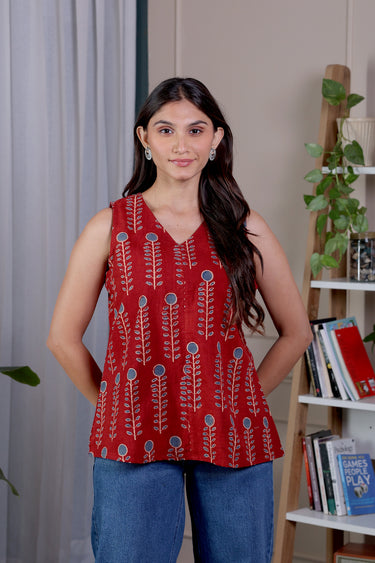
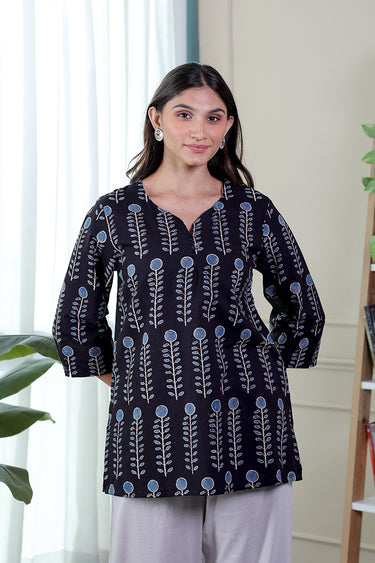
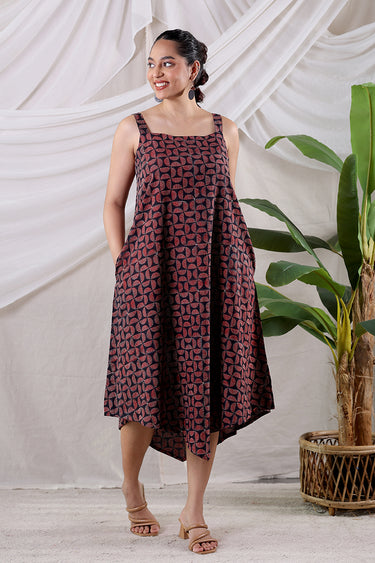
All Cotton Cottage pieces are ethically handcrafted in India, produced in small runs to ensure every garment is rare and special. Sizes S to XXL available. Free shipping in India on orders above ₹1,500, with international shipping available.
Conclusion
Fashion moves in cycles. Colours come back, silhouettes get reimagined, and everything that was once "retro" eventually becomes "timeless." But Ajrakh never needed any of that. It didn't wait for a trend revival. It simply never left. That is the real answer to why Ajrakh prints never go out of style: they were never styled for a moment. They were made for a lifetime and a legacy.
When you choose Ajrakh, you're not just making a fashion choice. You're continuing a 4,000-year-old conversation between the earth, the artisan, and the wearer. That's not something a trend can replicate.